
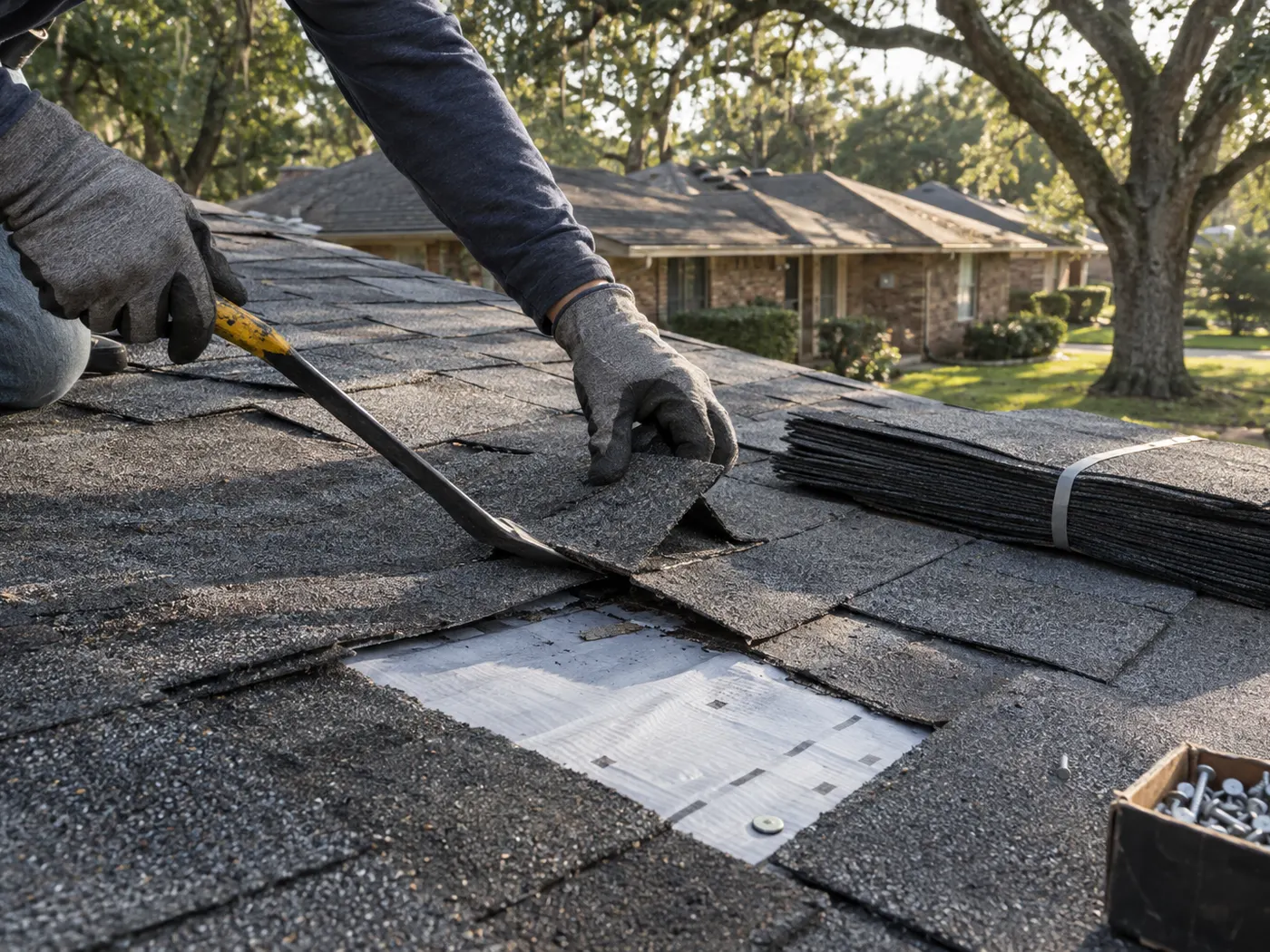
Why it matters in Houston
Texas had 902 major hail events (hailstones one inch or larger) in 2025, the most of any state and more than double second-place Kansas, according to the Insurance Information Institute. State Farm alone paid $1.4 billion in Texas hail claims that year (State Farm).
Check from the ground (do not climb)
- Dents in soft metal: gutters, downspouts, AC fins, mailboxes, window screens and roof vents you can see.
- Granules piled at downspout outlets or in gutters, like coarse black sand.
- Shingle pieces or ridge caps in the yard.
- Spatter marks on fences, decks and siding where hail knocked off dirt or paint.
- Neighbors filing claims or getting new roofs on your street.
What a roofer looks for up close
- Bruises: soft spots that give under light pressure, from a cracked mat underneath.
- Random pattern: hail hits are scattered. Wear and blistering usually follow the sun-facing slope evenly.
- Exposed mat where granules are gone, often dark and circular.
- Directional damage: more hits on the slopes facing the storm.
- Collateral damage on vents, flashing and gutters that confirms hail size.
Hail vs. normal wear
Insurance pays for sudden damage like hail, not for a roof that is old or worn out (TDI). Blistering, even granule loss, cracking from heat and curling edges are age. Random bruises with fresh exposed mat, matched by dents in metal, point to hail. An honest inspection separates the two.

Then what?
Photograph what you found, report the claim as soon as you can, and book a free roof inspection. TDI recommends being there for the adjuster's visit with your contractor (TDI).